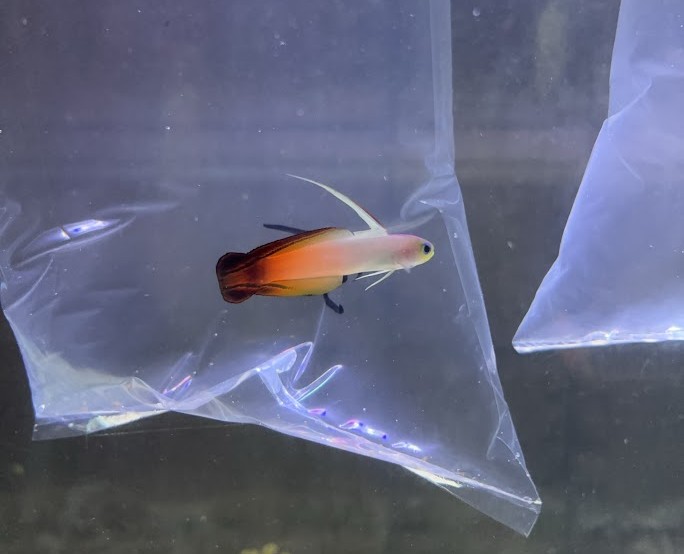
Walking into a fish store, you’re likely overwhelmed by all of the options and the pressure of an employee interrogating you about your setup: believe me, I’ve been in both of these positions before. Keep in mind that your livestock is confined to the size of your tank. Animal welfare is at stake here, and it is on you to properly care for your livestock. Though this idea is sprinkled throughout the hobbyist community, it isn’t as commonplace as you’d think.
Yeah, I’m talking about horror stories from friends, customers, and random people on Reef2Reef…“I’ve kept my betta alive for years in a coffee mug! Why would I need to go larger?!” Don’t be that person.
Furthermore, stocking your tank properly can save you time, money, and maintenance. Depending on a species’ bioload, this can significantly impact your water quality. Analyze your setup: what filtration do you have going on? Do you have plants? Lighting?
- Keep in mind that this is a very nuanced conversation. Of course, nothing is going to be a “one-size-fits-all”. However, common sense does go a long way. Once you have the foundations down, you’ll begin to trust your judgement. This, coupled with research, will be your best friend.
1. Tank Size
There’s a reason that this is the first question you get asked at the store. This is one of the most important factors to consider, as it can impact…
- Stress levels (and thereby species’ health)
- Species’ compatibility
- Maintenance frequency
Generally speaking, some people abide by the “one inch of fish per gallon of water rule”. This means that for every inch a fish is, that is the necessary gallons to care for it. I personally find this a little too confining, especially in saltwater. Additionally, it’s skimming the line of “not enough space“. Remember, we can do better than the bare minimum- it isn’t you that is living in your tank for the rest of your life.
I try to go for a “one inch of fish per five to ten gallons of water” if I can… (past coworkers put me on to this). Yes, this is more expensive upfront; however, larger tanks are generally easier to maintain.
You want to avoid “overstocking” your tank, which means you’ve added too many fish. This can be stressful or even dangerous for species at times; all that organic matter being produced is bound to cause problems unless handled.

However, some professionals purposely overstock tanks (i.e., African Cichlids) to mitigate aggression between conspecifics. This is one example of where overstocking may be necessary.
2. Hardiness or ‘Ease of Keeping’
This is something to consider, especially for beginners. Fish that can withstand a variety of conditions are preferred across the board; however, some of the most sought-after species lack hardiness and are difficult to keep. If you have the time and energy to care for your systems, these species may be for you. Hardy fish are flexible to changes in water quality and other stressful changes. Generally speaking, they do well in containment and are less susceptible to disease.
Some species are difficult to keep due to feeding behavior, size, and aggression. Though they may be hardy, they may be voracious ambush predators like frogfish: eating any living thing that they can fit in their mouths. Maybe you really want a freshwater arapaima (Arapaima gigas), but you only have a 50-gallon tank, stocked with angelfish. You might be walking through a store and see Mandarin dragonets (Synchiropus splendidus), a popular but difficult species to keep. They are continuous eaters, depending on a diet of live zooplankton. Many hobbyists end up starving their mandarin dragonets to death (by accident) due to missed feedings.
3. Compatibility
You want fish that will coexist. Compatibility done right won’t stress you or your fish out. This is not to say that some species or conspecifics won’t aggress occasionally, but you don’t want a bloodbath.
You can hypothetically keep aggressors in a tank, given precautions like added space, hideouts, and generous feedings. Sometimes these precautions don’t work, and you end up with a bloodbath anyway. For beginners, it’s recommended that you start with ‘peaceful’ species. But still… how do you choose these species?
Consider things such as behavior: are you purchasing a species that prefers to hide in the crevices of liverock, or are you purchasing a consistently free-swimming fish? Are they a solitary species or a social species? If they’re social, how many individuals per group is the minimum?
You can find online sources to help you gauge compatibility. Bulk Reef Supply has a substantial chart on its main website. See it below.

4. Water Quality & Parameters
Arguably, the most important factor to consider when purchasing fish is water quality. Large changes in water parameters cause stress to both freshwater and marine species, which can lead to death. This is why acclimation processes should be carried out when making purchases.
Consider your tank’s water parameters… Is it freshwater or saltwater? What do the nitrite and nitrate levels look like? What’s the salinity/specific gravity within the tank? Certain species have their desired qualities, so it is best to analyze what conditions a species lives in before making your purchase.
Putting It All Together
The last thing to do is to put it all together now. How will the size of your tank and its water quality suit the fish that you want? Are there any changes you need to make before buying? Whether you know what you want or not, consider your system in discovering what you do want.
Here are some of the things that are important when researching species. Some of them were explicitly covered, while others were breezed over.
- Minimum gallon size
- Feeding preference
- Sociability (social or solitary)
- Habitat preference
- Compatability
- Hardiness
There are thousands of resources to find information on fish, plants, and invertebrates. Books, hobbyist websites, forums, and peer-review/open access research are just a few places to educate yourself. This doesn’t have to be a stressful process; have fun with it!